Managing Ecological Transformation to Enhance Carbon Storage and Biodiversity
Project Start and Stage
Start: June 2023
End: June 2026 (In-progress)
Brief Project Description
Ecological transformations, also known as state changes/transitions, regime shifts, or vegetation type conversions, can be caused by different disturbances including wildfire, climate change, and invasive species, as well as interactions between these drivers. In the North Central (NC) region (Colorado, Wyoming, Montana, North Dakota, South Dakota, Nebraska, and Kansas), invasive species and climate change are intricately linked to changing fire regimes, and together, these drivers can have pronounced effects on ecosystem transformations followed by subsequent effects on composition, structure, and function.
In this project we extensively assessed how the forest to grass/shrubland transformations changed the aboveground biomass storage and the risk of current forest locations to transform into grass/shrubland within the next two decades.
Project Goals
- Mapped where ecosystem transformations have already occurred.
- Produced a time series of aboveground biomass from 2013–2017 at 100 m spatial resolution using satellite-based aboveground biomass density data, GEDI, and MODIS spectral indices for the seven states mentioned above.
- Assessed the aboveground biomass change caused by ecosystem transformation including the pixel-level variance of biomass.
- Mapped the locations which are mostly vulnerable for transformation within the next decade, 2026–2047. The map shows the probabilistic risk of transformation within this given time frame based on past vegetation index changes and future fire and climate risk.
Project Workflow
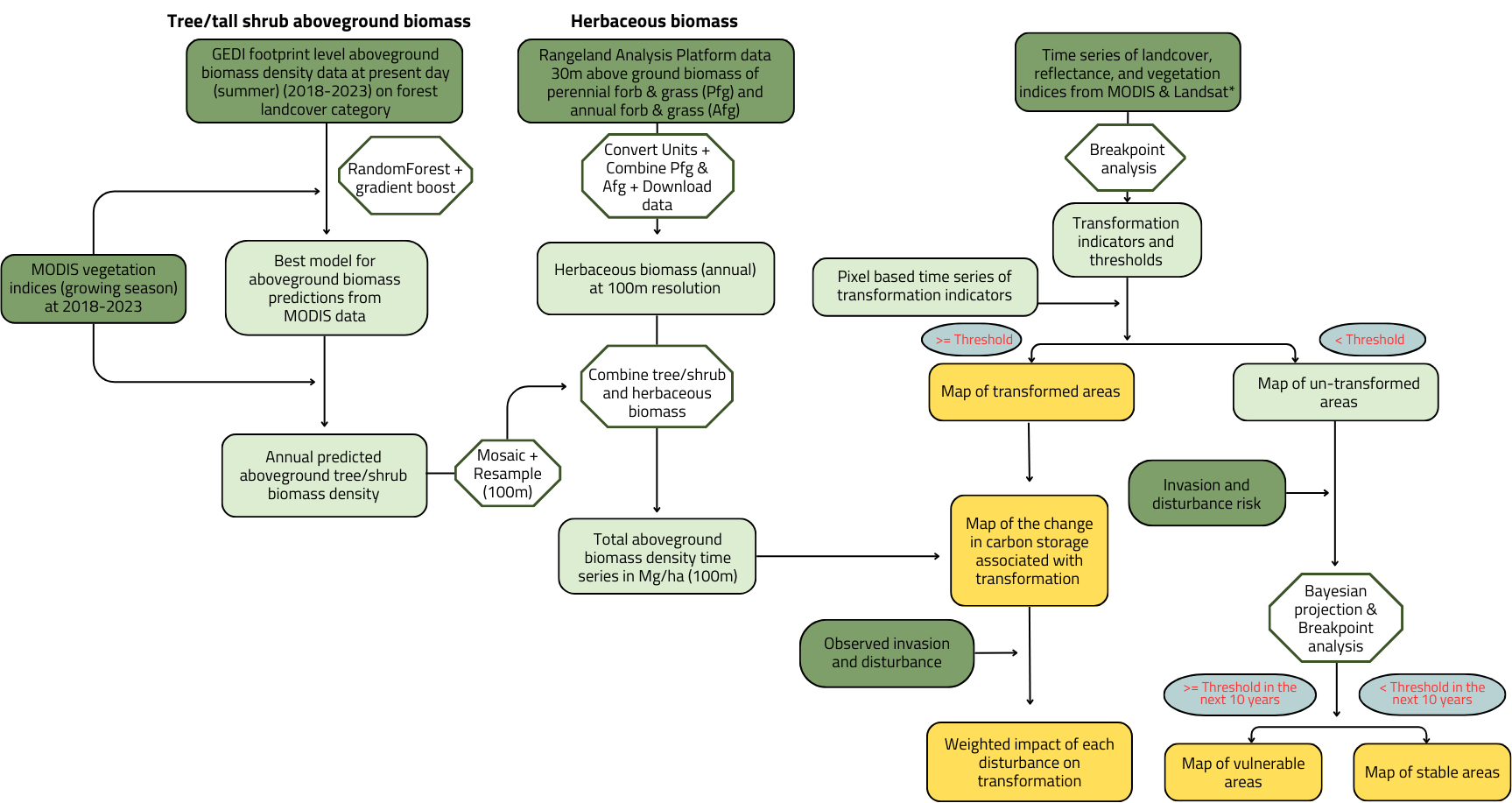
Figure 1. Major workflow steps developed to achieve the project goals.
Relevant Links
Links will be added as products become available.
Team Members

Nayani Ilangakoon

Esmée Mulder

Chelsea Nagy
Lauren Haas