Invasive Annual Grass Relationships to Environment and Grazing Vary with Species Identity
Rachael A. Dennis, Madelon F. Case, Kirk W. Davies, Chad S. Boyd, Calvin Penkauskas & Lauren M. Hallett
Biological Invasions, Volume 28, Article 18, 2026
https://doi.org/10.1007/s10530-025-03719-w
Written by Murphy Dykstra, edited by Nate Hofford
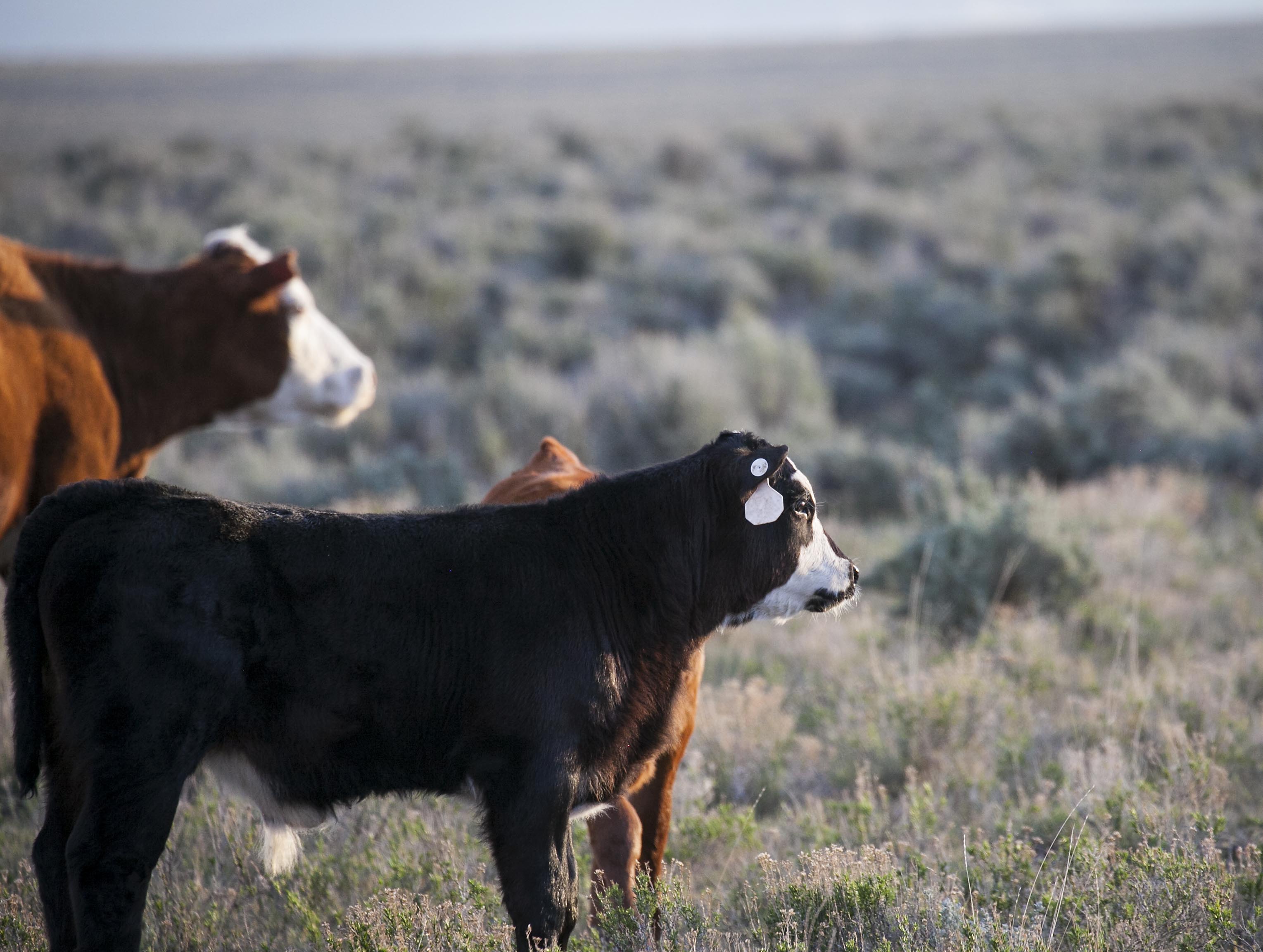
Image credit: USFWS Mountain Prairie, Public domain, via Wikimedia Commons
.jpg)
Summary of Paper
Annual grass invasion is a major threat to sagebrush steppe ecosystems. Cheatgrass (Bromus tectorum) has historically been the most prevalent annual grass invader of the region, but there are many other invasive annual grasses present in this system. Invasive annual grasses can have detrimental impacts on ecosystems, including decreasing native plant diversity, decreasing below-ground carbon storage, and reducing habitat quality for livestock and native foragers. An ecosystem’s risk of invasion depends on both environmental conditions and management decisions. Because of the prevalence of cheatgrass, research agendas have largely focused on understanding environmental drivers of cheatgrass invasion, while other species have remained understudied. Recent years have seen annual grass invasion in areas considered resistant to invasion, suggesting emerging invaders can take hold in distinct conditions. Species-specific research is required to identify the response of individual invasive species to climate and management in order to understand how invasive grasses spread.
Through a field study of 43 sites in the Great Basin region of southeastern Oregon, Dennis et al. found that four invasive annual grass species, cheatgrass (Bromus tectorum), Japanese brome (Bromus japonicus), medusahead (Taeniatherum caput-medusae), and ventenata (Ventenata dubia), differed from one another in their relationships to climate, soils, fire history, and grazing intensity.
While cheatgrass, as a long-standing invader, was resistant to most environmental conditions and its abundance could be predicted mainly through temperature, the presence of the other grass species was facilitated by other environmental conditions. Ventenata variation was related to soil texture, with a preference for higher soil sand content. Medusahead was more abundant in plots with low elevation as well as near a water source, with especially high concentrations found in plots with both of these conditions. This suggests medusahead is resistant to grazing pressure, likely explained by its unpalatability. Japanese brome abundance was higher in plots with lower soil sand content, while the grass also showed vulnerability to grazing pressure.
The results of the study aligned with prior knowledge that invasive annual grasses are more successful in lower elevations, with the species observed in the study being more abundant in low-elevation plots. However, the results differed from prior understanding of invasive annual grass behavior in that grasses were found in greater abundance at higher elevations when higher precipitation was also present. This result goes against traditional theories of invasive annual grass invasion, which suggest that annual grasses decline in cooler, wetter conditions. The authors believe this may be related to the grazing pressure exhibited by the plots studied, which may give invasive annual grasses the opportunity to establish in otherwise poor conditions. The study showcased that a one-size-fits-all management program, which may have been employed in the past due to the dominance of cheatgrass, will likely be ineffective in controlling the various invasive annual grass species present in sagebrush ecosystems. Their findings emphasize the importance of treating annual grass invasion as a multi-species system, recognizing the unique environmental niche and relationship to grazing each species holds. Additionally, the findings suggest disturbance hot spots, such as water sources, should be monitored, as these may be the places where annual grass invasions begin.
Take-Home Points
- Invasive annual grass species respond distinctively to environmental conditions as well as to management pressures.
- Medusahead, Japanese brome, and ventenata were more likely to be present at high-elevation and high-precipitation sites, suggesting a vulnerability of grazed areas around water sources that otherwise might have been resistant to invasion due to perennial grass communities.
- Medusahead, Japanese brome, and cheatgrass cover was greater in sites that received burns in the past 25 years, suggesting a positive fire-cover relationship in these species.
- In cheatgrass, higher temperatures proved a better predictor of high cheatgrass abundance than fire, which suggests cheatgrass cover is less tied to fire history than cover of other invasive annual grass species.
- Japanese brome showed an opposite response to temperature from cheatgrass, exhibiting less cover when mean temperatures were higher.
- Grazing may not be a sufficient treatment for reducing medusahead abundance, as higher medusahead abundance was found in grazing hotspots near water sources. This is likely related to the unpalatability of the species.
Management Implications
- Controlling annual grass invasion requires a multi-species approach that recognizes the niche each species fills in the ecosystem it is invading.
- Grazing treatments are ineffective in suppressing specific annual grass species, such as medusahead, while potentially useful for others, such as Japanese brome.
- To suppress annual grass invasion, land managers must understand the unique conditions their land possesses, including temperature, elevation, precipitation, and soil texture.
- Land managers must also understand the invasive species present on their land and design treatment plans to suppress each species based on its environmental and management responses.
- Overall, managing invasive annual grasses requires moving beyond one-size-fits-all approaches centered on cheatgrass and toward strategic, species-specific management that accounts for multi-species invasions.
Contributors

Murphy Dykstra
Author